Back
Airtime Review

Airtime
£2 Cashback Signup Bonus
Airtime is a card-linked cashback app that automatically credits your phone bill when you shop at 200+ partner retailers. Sign up once, link a card, forget about it.
See full offer details →
Opinion / Review
Airtime Card-Linked Cashback App Review
Airtime is a card-linked cashback app that automatically credits your phone bill when you shop at 200+ partner retailers. Sign up once, link a card, forget about it.
Cashback Signup Bonus · £2
T&Cs apply. See full offer details →
Last updated 2 September 2026
On This Page
What is Airtime?
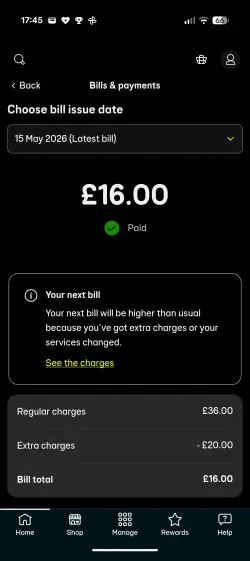
Airtime* (formerly Airtime, recently rebranded) is a cashback app that pays you in credit against your mobile phone bill. The mechanic is different to most cashback apps: instead of clicking through links (TopCashback) or buying gift cards through the app (EverUp, JamDoughnut), Airtime is card-linked. You add your Visa or Mastercard to the app once, and from that point every transaction at a partner retailer is tracked automatically. The cashback you earn builds up in your Airtime balance, and when it hits £10 you can credit it against your next monthly phone bill.
What makes Airtime worth installing is that there’s nothing to remember. You don’t need to open the app before you shop, you don’t need to scan receipts, you don’t need to click through anything. The card is linked once, the partner network includes most of the high-street brands you’d be shopping at anyway (Argos, Boots, Waitrose, ASOS, Greggs, IKEA, Deliveroo and around 200 more), and the cashback builds in the background. For low-effort cashback on spending you’d be doing anyway, it’s hard to beat.
Airtime was founded in 2015 and currently supports the four big UK mobile networks (EE, O2, Vodafone and Three) for both contract and pay-as-you-go customers, plus giffgaff and Lebara on pay-as-you-go. Many smaller networks aren’t supported: Tesco Mobile, Sky Mobile, Smarty, Voxi, iD Mobile, BT Mobile, Plusnet Mobile, Virgin Mobile, Asda Mobile, TalkTalk Mobile, Talkmobile, Lycamobile and Now Mobile and others. If your network isn’t on the supported list, you can still sign up and earn cashback, but the phone-bill-credit redemption route doesn’t work. You’d need to contact Airtime’s customer services to withdraw your balance to your linked payment card, which carries a £1.30 fee per withdrawal and a £20-per-month cap. From October 2025, if you switch from a supported network to an unsupported one, you need to redeem your accrued cashback first or you risk losing it.
Important things to know
Read these before you sign up so cashback actually saves you money instead of costing you money.
Should you use Airtime?
Yes, if you’re on a supported UK mobile network. Airtime is one of the easiest cashback apps to use because everything happens automatically: link a Visa or Mastercard once, shop as you normally would at 200+ partner retailers, and the cashback credits your monthly phone bill without you needing to do anything else. There’s no click-through, no receipts, no QR codes. If your network isn’t supported or you mainly use American Express, the value drops.
How Airtime works in practice
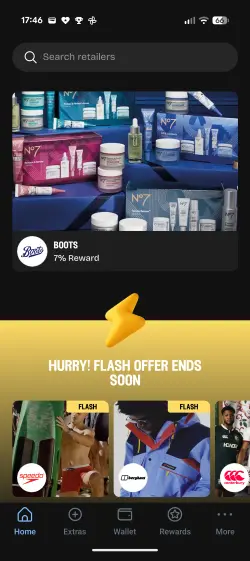
Setup is a one-off:
- Download the app and create an account.
- Enter the mobile number you want your cashback credited against, and choose your network.
- Link a Visa or Mastercard (debit or credit). Cards take up to 24 hours to activate.
- That’s it. From this point everything runs in the background.
When you shop at a partner retailer using your linked card, the transaction shows up in the Airtime app within a couple of days as a tracked reward. It moves from ‘tracked’ to ‘cleared’ after the retailer confirms the transaction (this typically takes up to 90 days on the free tier). Once your cleared balance hits £10, you can redeem it from inside the app and the credit applies to your next monthly phone bill.
There are a few things Airtime is upfront about. American Express transactions don’t track. Apple Pay and Google Pay work fine as long as the underlying card is a supported Visa or Mastercard. PayPal, Klarna and store cards aren’t tracked. Each retailer has its own transaction rules in the app, but in general anything paid directly with your linked card at the till or checkout will track.
What Airtime does well
Automatic by default. Once your card is linked, you don’t need to think about Airtime again. No app to open, no link to click, no receipt to scan, no cookie to accept. Shop normally and the cashback shows up in your account a couple of days later.
Stacks cleanly with other cashback. Because Airtime is card-linked rather than click-through, it doesn’t interfere with TopCashback or Quidco tracking. You can click through TopCashback for an online purchase, pay with a card linked to Airtime, and earn both layers. Same with gift card cashback from EverUp or JamDoughnut: use their gift card at the till while your linked card pays the small remainder, and you can still get the Airtime layer on that bit too. Three layers of return on one shop.
Partner network covers most everyday spending. Boots, Argos, Waitrose, Primark, ASOS, Greggs, IKEA, Deliveroo, Currys and around 200 other brands. Rates are typically 1-5% on supermarkets and high-street, with occasional ‘Reward Flash’ periods that bump selected retailers up to 10-20% for a few days.
Phone bill credit is friction-free. When you hit £10 cleared cashback, you tap once in the app and the credit applies to your next monthly bill automatically through your network. No bank details to enter, no withdrawal fees, no payout delays beyond the bill cycle.
Where Airtime could be better
Unsupported networks need a workaround. If you’re on Tesco Mobile, Sky, Smarty, Voxi, iD Mobile, BT, Plusnet, Virgin, Asda, TalkTalk, Talkmobile, Lycamobile or Now Mobile, you can still sign up and earn cashback but the phone-bill-credit route doesn’t work. You’d have to contact customer services to redeem to a payment card, which costs £1.30 per withdrawal and is capped at £20 per month. From October 2025 onwards, switching from a supported network to an unsupported one without redeeming first can lose you your accrued cashback.
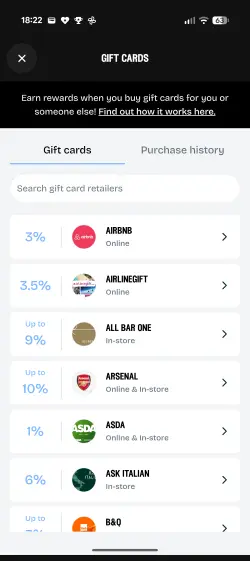
The gift card ‘earn more’ feature is a bit pointless. Airtime lets you buy gift cards through the app for around 4% extra cashback on top of whatever your linked card already earns. In principle this is a nice stack. In practice, since you can only redeem £20/month via bank withdrawal and phone bill credit just chips away at your monthly bill, you can’t actually pull the extra cashback out quickly enough for it to matter. The automatic card-linked side is what makes Airtime good, not the gift card side.
American Express isn’t supported. If you do most of your spending on Amex for the points, Airtime won’t see those transactions. Worth knowing before you sign up.
Clearing time can be slow on the free tier. Cashback shows as tracked within a couple of days but doesn’t clear (and isn’t redeemable) until up to 90 days later, depending on the retailer’s confirmation cycle. The optional paid tier (Airtime Up, around £1.99/month) cuts this to one day and drops the redemption minimum to £5. Worth it only if you’d be redeeming frequently.
Is Airtime safe?
Yes. Airtime Ltd is a UK company and has been operating since 2015. The card-linking infrastructure runs through official partnerships with Visa and Mastercard, and Airtime is PCI Level 1 compliant for handling card data. Your card number isn’t stored by Airtime in plain text, and the only information they pass back from your transactions is the retailer name, amount and date.
The phone bill credit goes directly through your mobile network, so the money is being applied to a bill you’re already paying. There’s no third-party balance to worry about losing. If Airtime went out of business, the only thing at risk would be any unredeemed cashback currently in your app balance, which is one reason it’s worth redeeming once you hit the £10 minimum rather than letting it build up.
Trustpilot ratings on Airtime are mixed, with the common complaints being around recent fee increases on bank withdrawals and the removal of some redemption options (the gift option for sharing rewards with friends has been removed). That said, the card-linked cashback model itself is reliable and the company has paid out millions in phone bill credit since launch.
How to sign up for Airtime
- Sign up via my Airtime referral link* or use referral code
7CTKVTVKwhen prompted. - Download the Airtime app on iOS or Android and create your account.
- Enter the mobile number you want the cashback credited against and choose your network.
- Add a Visa or Mastercard (debit or credit). Cards take up to 24 hours to activate.
- That’s the whole setup. Shop normally at partner retailers and the cashback builds in the background.
Note on sign-up bonuses: Airtime has run various sign-up bonus offers historically (typically a £1.50-£5 phone bill credit). Check the current Airtime offer page for the latest version of any active bonus.
How Airtime redemptions work
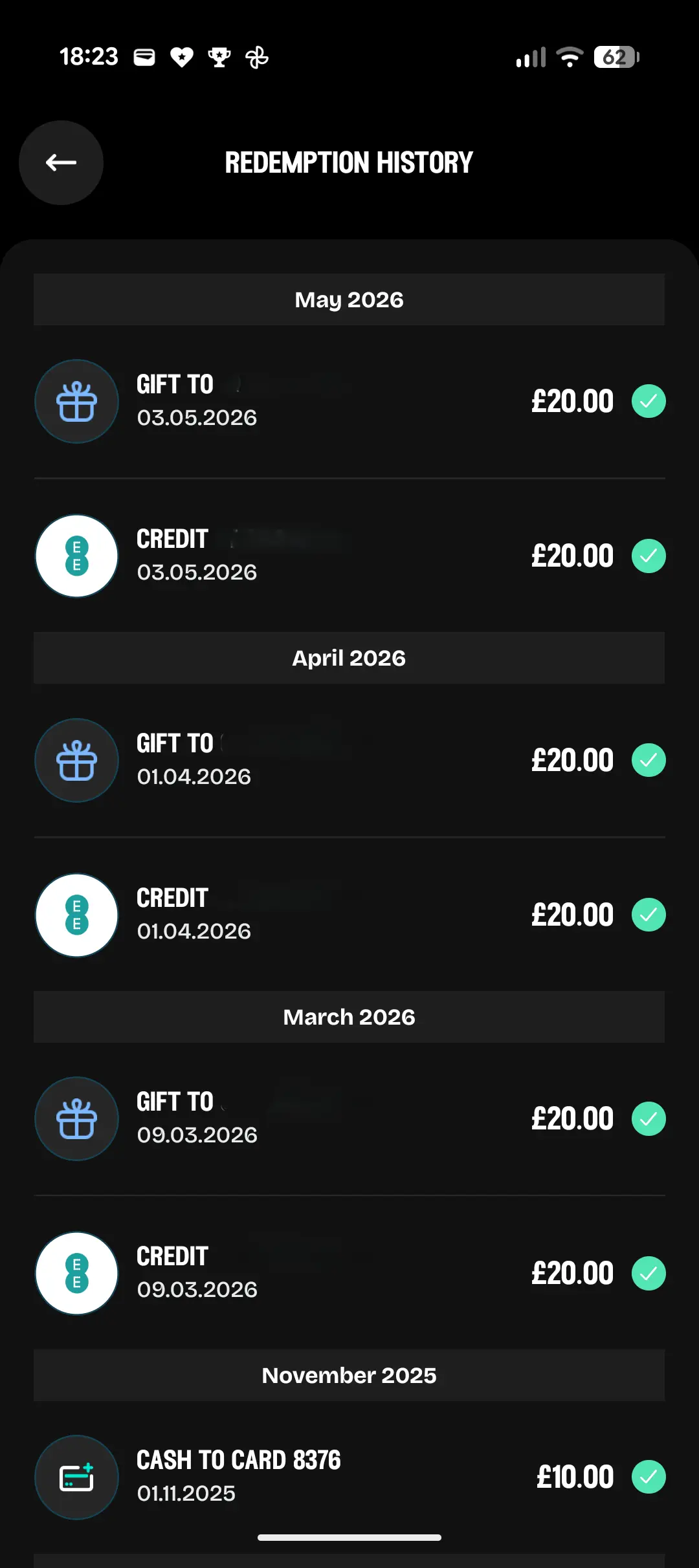
Phone bill credit (recommended). £10 minimum, no fees, applies to your next generated monthly bill. If your bill has already been produced for the month, the credit moves to the following bill. This is the default redemption route and it’s free.
Payment card withdrawal (only if your network isn’t supported). Available only by contacting Airtime customer services directly. £1.30 processing fee per withdrawal, £20 per month cap on the total amount you can withdraw to a payment card. Was more generous historically, recently restricted. From October 2025, if you switch from a supported to an unsupported network without redeeming your existing balance first, you can lose your accrued cashback.
Airtime Up paid tier (about £1.99/month). Drops the phone bill redemption minimum to £5, cuts clearing time from up to 90 days down to 1 day, adds exclusive offers and priority support. Uses Open Banking (requires a bank connection that needs reauthorising every 90 days). Only worth it if you’d be redeeming frequently or if the faster clearing matters for you.
Airtime Quick Facts
| Rating | ★★★★ 3.5/5.0 |
| Year Launched | 2015 |
| Region | UK |
| Min Age | 16+ |
| Signup Bonus | £2 |
| Min Cashout | £10 |
| Payout Speed | – |
| KYC Required | – |
| Referral Program | – |
| Mobile App | Yes |
| Browser Extension | No |
| Card Linking | – |
| In-Store Cashback | – |
| Covers Utilities | – |
Should you use Airtime?
Airtime is one of the easier cashback apps to recommend because once it’s set up, you don’t have to think about it. Most cashback apps need a deliberate action before each purchase (clicking through, buying a gift card, scanning a barcode at the till). Airtime doesn’t. You link your card once, then everything happens automatically.
If your mobile network is supported (EE, O2, Vodafone or Three on contract or PAYG, or giffgaff or Lebara on PAYG), Airtime is more or less a no-brainer. It costs nothing to use, it stacks with every other cashback approach (click-through sites, gift card apps, cashback debit cards), and the £10 redemption threshold isn’t hard to hit if you do regular shopping at the major high-street brands.
If your network isn’t on the list, Airtime gets less useful because the bank withdrawal route has a £20/month cap and a £1.30 fee per withdrawal. Worth checking the supported network list before you bother signing up.
Skip the gift card cashback feature. It looks like a clever stack on top of the card-linked side, but the £20/month withdrawal cap makes it hard to actually redeem the extra. The automatic card-linked cashback is the only feature that matters.
Frequently Asked Questions
What’s the difference between Airtime and other cashback apps like TopCashback or EverUp?
The mechanic is different. With TopCashback and Quidco, you click through their tracked link before each online purchase. With EverUp and JamDoughnut, you buy a digital gift card through the app before you pay. With Airtime, you do nothing. You link a Visa or Mastercard once and the app tracks every transaction at a partner retailer automatically. The trade-off is that you only get cashback at Airtime’s 200+ partner retailers, the cashback is paid as phone bill credit rather than cash, and the rates are typically a touch lower than what you’d get clicking through TopCashback.
Which mobile networks does Airtime support?
Monthly contract networks: EE, O2, Vodafone and Three. Pay-as-you-go networks: EE, O2, Vodafone, Three, giffgaff and Lebara. The big networks not supported are Tesco Mobile, Sky Mobile, Smarty, Voxi, iD Mobile, BT Mobile, Plusnet Mobile, Virgin Mobile, Asda Mobile, TalkTalk Mobile, Talkmobile, Lycamobile and Now Mobile. If you’re on an unsupported network you can still earn cashback but you’d need to contact Airtime customer services to withdraw your balance to a payment card. That route costs £1.30 per withdrawal and is capped at £20 per month. Worth checking the supported network list before signing up.
Why doesn’t Airtime support American Express?
Airtime’s card-linking infrastructure goes through Visa and Mastercard’s transaction data feeds. Amex runs on its own closed network and doesn’t expose the same kind of transaction data to third-party apps, so Airtime can’t see your purchases. If you do most of your spending on Amex for the membership rewards points, Airtime won’t track those transactions. The workaround is using a Visa or Mastercard credit/debit card for the purchases you want Airtime to track.
Can I stack Airtime with other cashback apps?
Yes, cleanly. Airtime tracks the transaction on your linked card regardless of where the purchase started, so it stacks with click-through cashback sites like TopCashback and Quidco, and with gift card cashback from EverUp or JamDoughnut. A single shop could earn you three layers: the click-through cashback for using TopCashback’s link, the gift card cashback for paying with an EverUp gift card, and the Airtime cashback for the small remainder paid with your linked card. See my cashback stacking guide for how to combine these properly.
Is Airtime Up (the paid tier) worth it?
Probably not for most people. Airtime Up costs around £1.99/month and gives you faster cashback clearing (1 day vs up to 90), a lower redemption minimum (£5 vs £10), exclusive offers and priority support. Unless you’re shopping enough that the faster clearing actually matters, or you specifically want to redeem in smaller chunks, the free tier covers what most people need. The free tier is what makes Airtime a no-brainer to sign up to. The paid tier is an optional upgrade.
Is Airtime safe?
Yes. Airtime Ltd is a UK company operating since 2015. The card-linking infrastructure runs through official Visa and Mastercard partnerships and Airtime is PCI Level 1 compliant. Your card number isn’t stored in plain text and the only transaction data passed back is the retailer name, amount and date. Phone bill credit goes directly through your mobile network rather than being held by Airtime as a third party, which limits the financial risk to whatever unredeemed cashback is currently in your app balance. Worth redeeming once you hit the £10 minimum rather than letting it build up.
What is a cashback site and how does it work?
A cashback site is a middleman between you and the retailer. When you click through to a shop using a cashback site link, the retailer pays the cashback site a commission for sending you their way. The cashback site then passes most of that commission back to you as cashback in your account. You don’t pay anything extra, you don’t share your card details with the cashback site, and you generally pay the same price you would have paid by going to the retailer directly.
The whole system is funded by retailers, who treat the commission as a marketing cost. Cashback sites compete on how much of that commission they pass back to members, the breadth of retailers they cover, and how easy they make the payout process.
Are cashback sites safe and legitimate?
The established UK cashback sites (TopCashback, Quidco, Rakuten, KidStart and a handful of smaller ones) are legitimate and have been operating for over a decade in most cases. They are registered companies, regulated by the same consumer protection laws as any UK e-commerce business, and have paid out hundreds of millions of pounds between them. You don’t share payment card details with the cashback site itself, you don’t pay a membership fee, and there is no upfront cost.
Smaller or newer cashback sites can be riskier. If a site looks new, doesn’t list a registered company name, or asks for unusual personal information up front, treat it with caution. The reviews on Scrimpr only cover cashback sites that have a track record of paying out reliably.
How long does it take to get my cashback?
There are usually two stages. Pending cashback appears in your account within a few days of your purchase, sometimes within minutes. It is the cashback site’s record that your click-through resulted in a sale. Confirmed cashback lands once the retailer has reviewed the transaction and accepted that it was valid (you didn’t return the item, the order wasn’t cancelled, the payment didn’t bounce). Confirmation typically takes between 30 and 90 days, and some retailers can take six months or more.
Once your cashback is confirmed, withdrawing it to your bank account or PayPal usually arrives within a working day. The slow part of the process is almost always the retailer side, not the cashback site side.
Why has my cashback not tracked?
Tracking failures are the single most common complaint with any cashback site, and the cause is almost always one of the following:
- Cookies were blocked or cleared between clicking through and checking out. The cashback site uses a cookie to remember which member sent you to the retailer, and if the cookie is missing the sale won’t be attributed to you.
- An ad-blocker, privacy extension or VPN silently dropped the tracking request. This is the cause in a large share of cases where the member is certain they did everything right.
- You browsed the retailer’s site separately before clicking through. Most retailers attribute the sale to the most recent affiliate cookie, so an earlier direct visit can overwrite the cashback site’s tracking.
- You used a discount code that wasn’t sourced from the cashback site. Many merchants void the cashback entirely if you apply an external code at checkout. Always check whether the cashback site lists the code before using it.
- The retailer treats your purchase category as ineligible. Some retailers exclude certain product categories from cashback (gift cards, subscriptions, in-store collections etc.). The merchant page on the cashback site usually lists the exclusions.
If your cashback hasn’t tracked after the expected window, raise a “missing cashback” ticket through the cashback site with your order number, the date and time of purchase, and the merchant’s confirmation email attached.
What does "confirmed" cashback mean?
Confirmed cashback is cashback that the retailer has reviewed and accepted as a valid sale. Only confirmed cashback can be withdrawn. Until your cashback is confirmed, it sits in a pending state and could in theory still be voided (typically if you return the item, cancel the order, or the payment fails after the fact). In practice, most pending cashback does eventually confirm, but it can take longer than you might expect.
Can I use cashback sites alongside discount codes?
It depends on the retailer and where the code came from. Voucher codes that are listed directly on the cashback site itself are normally safe to use, because the cashback site already knows about them and won’t void your transaction. Codes sourced from other voucher sites or social media often invalidate your cashback entirely.
The safest approach is to check the cashback site’s merchant page before completing your purchase. If a code is listed there, it should stack. If it isn’t, you may need to choose between using the code or earning the cashback, and for higher-value purchases the cashback is often the better deal.
Can I use multiple cashback sites at the same time?
Yes. The vast majority of people who take cashback seriously have accounts on TopCashback, Quidco and Rakuten as a minimum, and check the rates at each before clicking through. Rates and exclusive deals vary between sites, so the same purchase can pay quite different amounts depending on where you start.
You can only use one cashback site per transaction, however. The site you clicked through from last is the one that gets attributed to the sale, so don’t bounce between cashback sites during checkout.
Is cashback taxable in the UK?
Cashback earned on personal shopping is not taxable in the UK. HMRC treats consumer cashback as a discount or rebate rather than income, so it falls outside the tax system and doesn’t need to be declared. This applies whether the cashback is paid through a dedicated cashback site, a credit card scheme, or as part of a current account reward programme.
The picture changes if you are using cashback as part of a business or trading activity (for example, if you operate a buy-and-resell business and the cashback effectively reduces your cost of goods). In that case the cashback would normally be netted off against the cost of the purchase rather than counted as income, but the right answer depends on your specific setup. If in doubt, check with HMRC or an accountant.
What’s the difference between a cashback site and credit card cashback?
A cashback site pays you a percentage of the retailer’s commission whenever you click through their link. A cashback credit card pays you a percentage of every purchase you make on the card, regardless of where you shop or how you got there.
The two stack cleanly. You can click through a cashback site to a retailer, pay with a cashback credit card, and earn cashback from both sources on the same transaction. For larger purchases, stacking cashback site rewards with a 1-2% cashback credit card can meaningfully reduce the net cost.
Why does the cashback I earn sometimes get voided?
The most common reasons for a confirmed cashback being voided after the fact are: the order was cancelled or refunded, you returned the item, the payment was charged back, you used a discount code that wasn’t listed on the cashback site, you registered a duplicate account at the retailer, or the retailer disputed the transaction with the cashback site.
If the cashback was voided in error, you can raise a dispute with the cashback site and supply your order confirmation, payment receipt, and any other proof that the transaction was valid. Most cashback sites will manually reinstate the cashback if you provide good evidence.
Is using a cashback site free?
Yes. Established UK cashback sites are free to join and free to use. You don’t pay a membership fee, you don’t share payment card details with the cashback site itself, and withdrawals to your bank or PayPal don’t cost anything. The site makes its money from the share of retailer commission it keeps when it passes the rest back to you.
Some sites offer an optional paid tier (Quidco Premium is £5/year, for example) that bumps your rates on selected retailers and gives you priority customer support. The free tier still works fully without ever upgrading.
Are cashback sites only for online shopping?
Mostly, yes, but not entirely. The bulk of cashback comes from clicking through a cashback site to an online retailer before checkout. However, several cashback sites also offer:
- In-store cashback through prepaid gift cards — you buy a gift card on the cashback site at a discount or with cashback attached, then use it at the till.
- Card-linked cashback — link a debit or credit card to the app, spend at participating retailers in-store, cashback is tracked automatically.
- Utility, insurance and broadband switches — handled through embedded comparison tools on the cashback site itself, with cashback paid for completed switches.
For everyday in-store spend, dedicated cashback debit cards and Airtime usually pay more than the in-store features of general cashback sites.
Is cashback worth doing for small purchases?
Honestly, no — most cashback under about £1 is a poor use of your time, especially if it requires clicking through a comparison tool and remembering to start your shopping journey from the cashback site. The bigger the purchase, the more cashback matters. A 5% rate on a £400 mobile contract switch pays £20 for thirty seconds of effort. A 5% rate on a £4 add-on order pays 20p.
The realistic value of any cashback site is in the larger discretionary purchases (insurance, broadband, mobile contracts, holidays, white goods) where 30 seconds of comparing rates can return £50-£100+ of cashback. The small everyday tracked purchases are a bonus on top, not the main event.
How do cashback sites make money, and what does "100% cashback" actually mean?
The major UK cashback sites (TopCashback and Quidco) operate on a “100% cashback” model. That phrase is widely repeated and often misunderstood. It does not mean you get 100% of what you spend back. It means the cashback site passes on 100% of the affiliate commission the retailer pays them, without skimming a margin from your share. So if a retailer pays a 5% commission, you receive the full 5% as cashback rather than 4% with the cashback site keeping 1%.
These sites earn their actual revenue from two separate sources:
- Retailer bonuses (overrides) — extra payments that retailers make to top-performing affiliates for hitting agreed volume targets. These are paid by the retailer on top of the per-transaction commission and aren’t allocated to any individual customer.
- Optional paid tiers — TopCashback Plus and Quidco Premium (£5/year) are opt-in upgrades for boosted benefits.
Despite claims published elsewhere, neither TopCashback nor Quidco silently retains £5-£12 a year, or any percentage of your cashback, on the standard Classic tier. Both companies’ published terms confirm that Classic membership has no automatic deductions, and Quidco’s own help docs explicitly state the same.
See our reviews of other cashback sites and apps